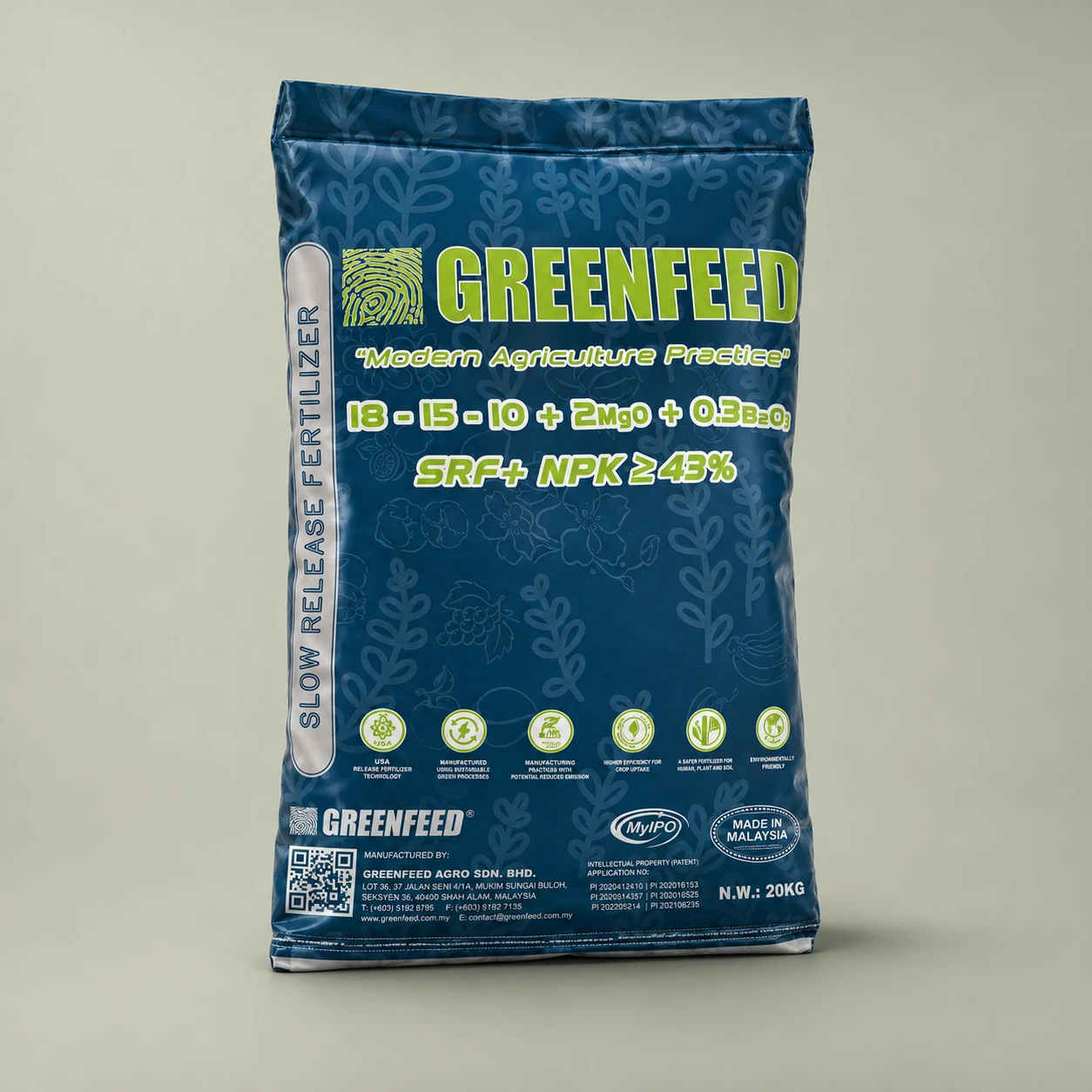
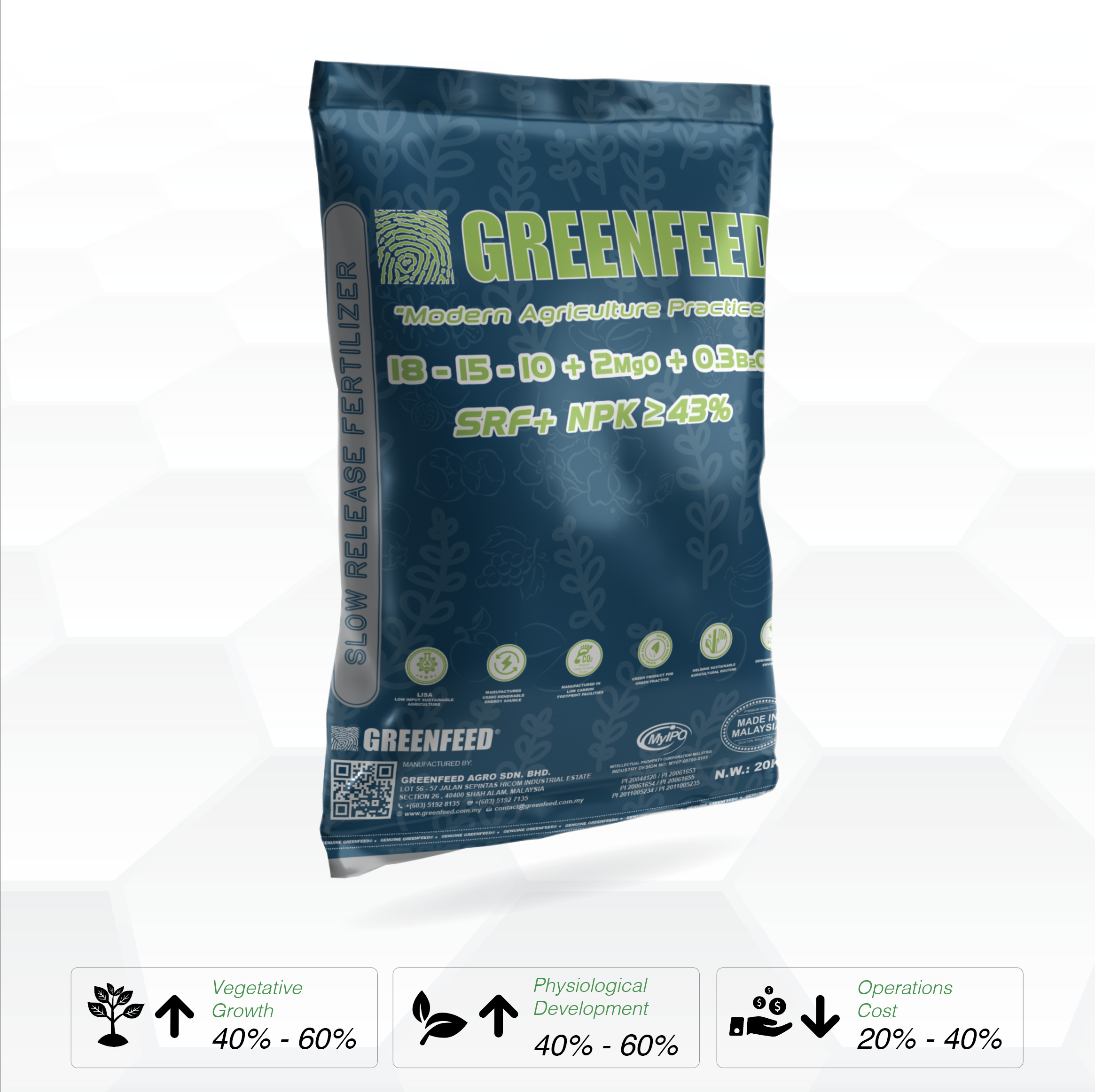
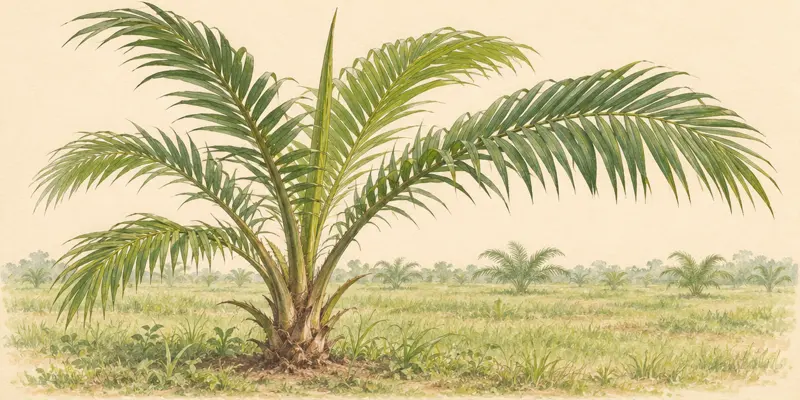
Greenfeed® SRF+ supports vegetative growth in immature oil palms. Product choice and application must follow site-specific agronomic advice and the current product label.
Greenfeed® combines a compressed fertilizer nugget with zeolite to support gradual nutrient availability. The manufacturer describes zeolite as helping retain nutrients and moisture around the application area.
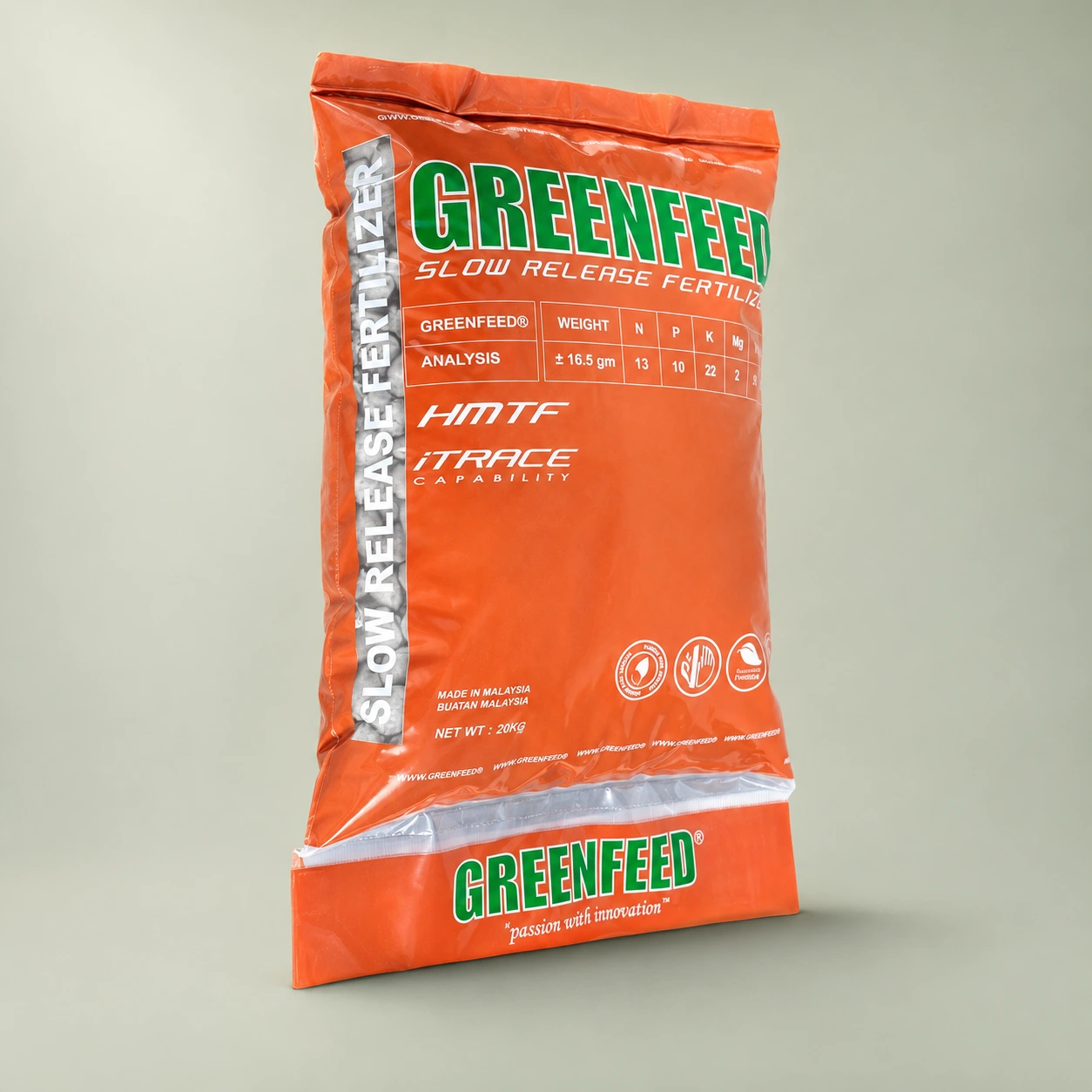
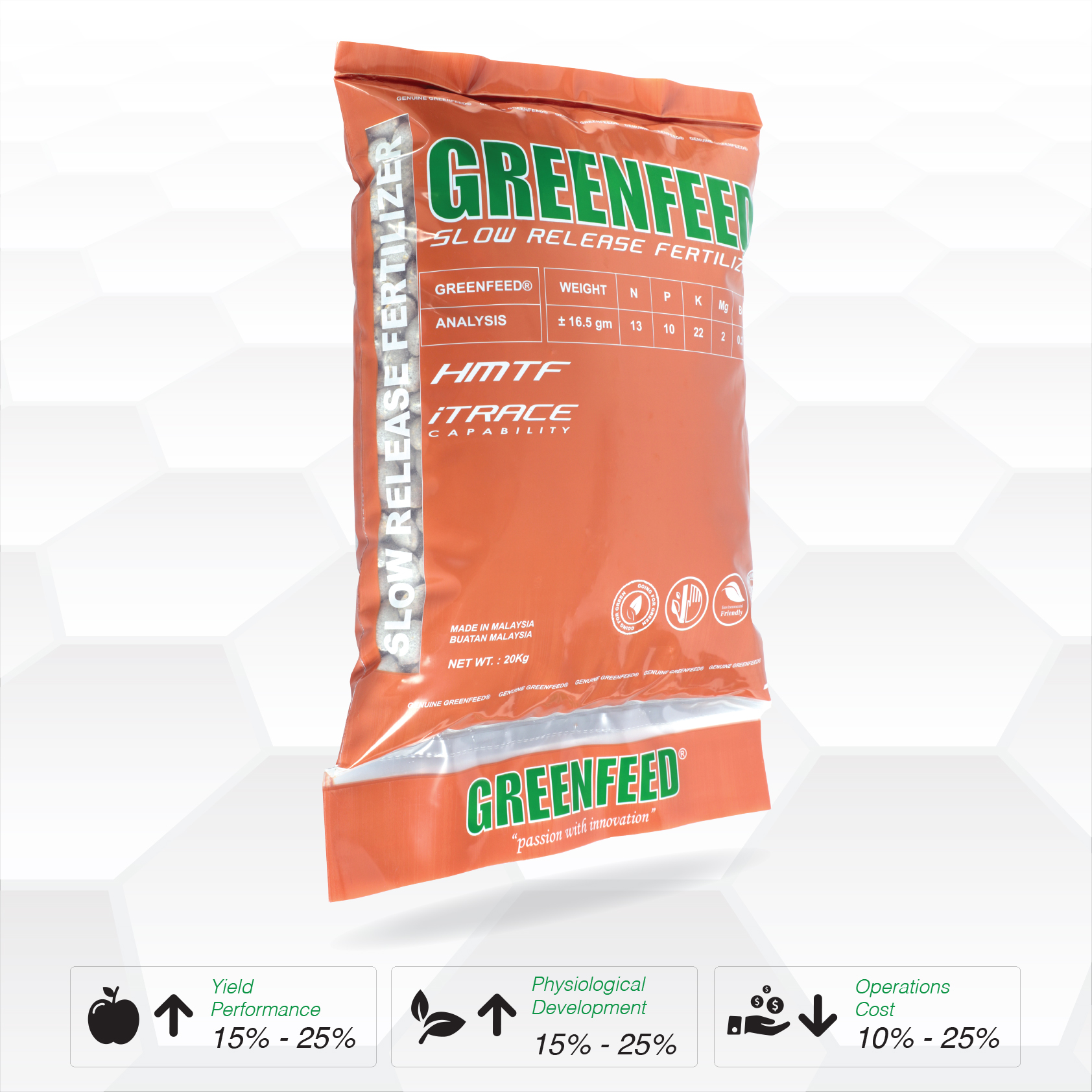
13:10:22N : P₂O₅ : K₂O
+ 2MgOWITH TRACE ELEMENTS
The manufacturer identifies this formulation for mature oil palm. Product choice and application must follow site-specific agronomic advice and the current product label.
The manufacturer describes pressed nuggets of approximately 16–19 g and nutrient availability over 90–180 days per application. This is a manufacturer description, not a guaranteed release period for every site.
The role of zeolite
Greenfeed describes zeolite as a nutrient-holding component that supports gradual nutrient exchange and moisture retention.
A site-specific recommendation
Soil, rainfall, palm age and the selected formulation all belong in the application discussion. Confirm rate, placement and timing with the relevant agronomic recommendation.
VEGETATIVE GROWTH / MANUFACTURER LISTING
Greenfeed® Slow Release Fertilizer SRF+ 18:15:10 + 2MgO + TE
Greenfeed Agro formulates SRF+ for vegetative growth in immature oil palms. It supplies 18% nitrogen (N), 15% phosphate (P₂O₅), 10% potash (K₂O) and 2% magnesium oxide (MgO), with trace elements and activated zeolite.
The manufacturer lists nitrogen at 13%, phosphorus as P₂O₅ at 10%, potassium as K₂O at 22% and magnesium as MgO at 2%, with additional nutrients. Refer to the current label and official specification for the full composition.
The manufacturer lists these as separate product categories. This website focuses on Greenfeed® Slow Release Fertilizer; specifications should always be checked for the exact product selected.
How much should my plantation apply?
Application rates require a review of palm age, field conditions, analysis results and current practice. Contact Smart Agro Tech to coordinate a suitable recommendation.
Does the technology guarantee a yield increase?
No single product determines yield. Field conditions, agronomy, weather and management practices influence the response. Assess suitability and monitor performance within the plantation’s programme.
More for You to Explore
ENGLISH
Oil Palm Fertilizer: Two Bags Look Alike. What Sets Greenfeed® Apart?
From the roots and fronds of immature palms to the flowers and bunches of mature palms, each stage of growth offers clues to the nutrients the palms need.
Imagine an estate manager comparing two oil palm fertilizer proposals. Both list nitrogen, phosphorus, potassium and magnesium. Both are recommended for mature palms. One comes in readily soluble granules. The other comes in compressed nuggets that release nutrients gradually. On paper, the difference looks small. In the field, it raises a practical question: how long can one application continue supplying nutrients before the crew needs to return to the block?
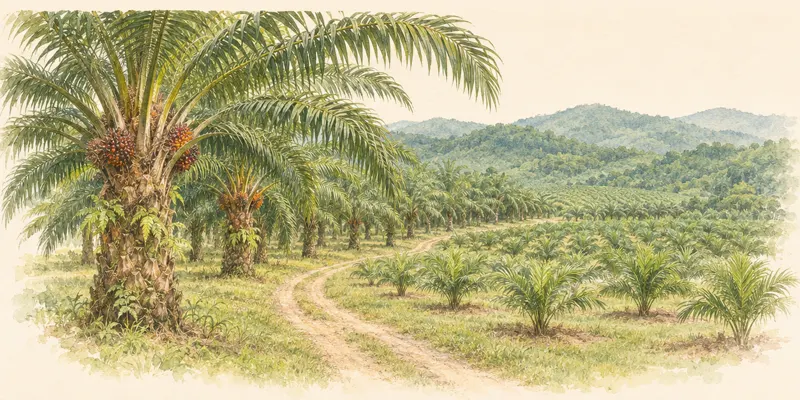
In a replanted block, the eye is drawn to new fronds opening well, fresh-looking leaves and even growth along the rows. In a mature block, attention turns to flowers, fruit and the bunches brought in for weighing. Greenfeed® offers formulations for both stages. Choosing between them begins with the growth you want to support in the palms in front of you.
Immature palms: growth begins with the roots
In the first years after planting, there are no harvest records to show how a block is performing. The earliest observations usually concern the spear leaf, leaf colour and newly opened fronds. Beneath the surface, roots are developing to reach water and nutrients. According to Greenfeed Agro, its formulation for immature palms is designed to support root development as well as leaf and frond growth during this stage.
How can you follow that progress? Choose a row planted at the same time. Look at the new fronds and see whether any group of palms is falling behind its neighbours. Fresh green leaves are encouraging, but colour alone tells you little about root condition or whether every nutrient is adequately supplied. If several palms remain pale or grow slowly, start there. Soil conditions, fertilizer history and leaf analysis can help explain what you see.
When seeking a recommendation, mention whether the seedlings are still in polybags or have already been planted out. Both are often called immature palms, yet the space available to their roots and the appropriate fertilizer placement differ. Greenfeed® provides separate application guidance for these stages. Identifying the stage helps the field team use the right guidance from the outset.
Mature palms: from flower formation to bunch weight
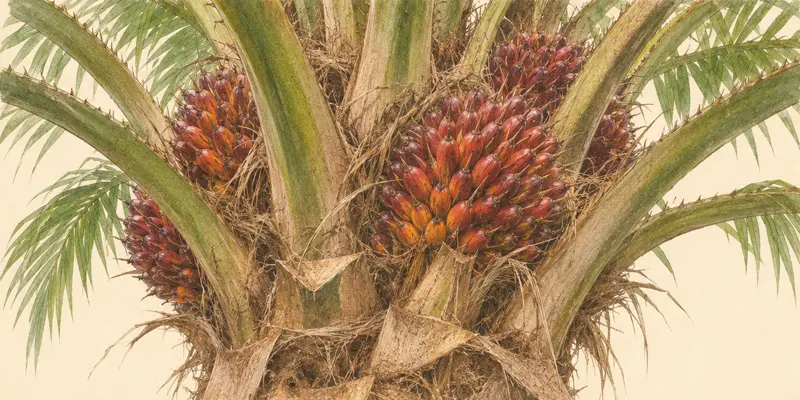
A full canopy is easy to see from the estate road. On harvest day, attention shifts to how many bunches have been cut and what they weigh. Long before a bunch reaches the scales, the palm has already gone through flowering and fruit development. The Greenfeed® formulation for mature palms is designed to support these processes, including fruit production and quality. This is where palm nutrition connects directly with what the estate harvests.
A large bunch draws attention, particularly on a palm that has previously yielded poorly. A clearer picture emerges when several harvesting rounds are compared. How many bunches came from the same area? What was the average bunch weight? Did total yield change? Read together, these figures show whether a change in the harvest came from bunch numbers, average weight or both.
Those records are useful before changing a fertilizer programme. Two blocks of the same age may have different yield and application histories. If leaf appearance changes or the harvest declines in one block, that history gives the agronomist a place to begin investigating. A formulation can then be recommended with the palms, soil and previous management of that particular block in mind.
What happens to a Greenfeed® nugget in the soil?
Readily soluble conventional fertilizer can make nutrients available quickly when there is sufficient moisture. Estates that can reliably complete several rounds can divide the annual supply between applications. Greenfeed® uses a compressed nugget that releases nutrients progressively. When water reaches the nugget, some nutrients begin to enter the soil solution. Part of the supply remains in the nugget for release in the days that follow.
The formulation contains zeolite, a mineral that helps retain certain nutrients near the application site. Greenfeed Agro reports a nutrient supply period of approximately 90 to 180 days per application. This range provides a starting point for discussing the next round with an agronomist. The appropriate interval still depends on the stage of growth, the amount applied and the nutrient requirements of the block.
Choosing for the palms in front of you
The supply period goes hand in hand with a simple question: where are the roots that will take up those nutrients? For immature palms planted in the field, Greenfeed® guidance shows the nugget placed below the soil surface near the plant. For mature palms, placement is near the canopy edge, beneath the outer fronds, where feeder roots are present. The palm’s stage of growth therefore guides both the choice of formulation and its placement.
Before the crew moves on, spend a few minutes at the first row. Watch where the nuggets are placed, how much is applied and how the soil is closed over them. That brief observation connects a purchasing decision with what each palm actually receives.
Two bags of fertilizer may look alike in the store. The nutrient list on the label tells us what is supplied. To understand its value to an oil palm, two further questions matter: how do those nutrients become available to the roots, and what does the palm need at this stage of growth? These questions bring the two features of Greenfeed® together: a formulation selected for the stage of growth and a nutrient supply released gradually over time.
For immature palms, frond development and even growth along a row help assess how well a programme suits the block. Once the palms mature, bunch counts and weights across successive harvests provide a more meaningful picture. A sound fertilizer choice begins with understanding the needs of the palm and gains credibility through observation in the field.
Baja Sawit: Dua Beg Nampak Serupa. Apa yang Membezakan Greenfeed®?
Dari akar dan pelepah sawit muda hingga bunga dan tandan pada pokok matang, setiap peringkat pertumbuhan memberi petunjuk tentang nutrien yang diperlukan.
Bayangkan seorang pengurus menerima dua cadangan baja sawit. Kedua-duanya menyenaraikan nitrogen, fosforus, kalium dan magnesium. Kedua-duanya disyorkan untuk pokok matang. Namun satu datang dalam bentuk butiran yang mudah larut, manakala satu lagi berbentuk nugget mampat yang melepaskan nutrien secara beransur-ansur. Di atas kertas, perbezaannya kelihatan kecil. Di ladang, perbezaan itu menentukan satu perkara yang sangat praktikal: berapa lama satu aplikasi boleh terus membekalkan nutrien kepada pokok sebelum pasukan perlu kembali ke blok tersebut?
Di kawasan tanam semula, mata tertumpu pada pelepah baharu yang terbuka dengan baik, daun yang kelihatan segar dan pokok yang membesar sekata sepanjang barisan. Di blok matang, perhatian beralih kepada bunga, buah dan tandan yang dibawa ke tempat timbang. Greenfeed® menyediakan formulasi bagi kedua-dua peringkat ini. Pilihannya bermula dengan memahami perkembangan yang ingin disokong pada pokok.
Sawit muda: pertumbuhan yang bermula pada akar
Pada tahun-tahun awal selepas penanaman, belum ada rekod tuaian untuk menunjukkan prestasi sesuatu blok. Perkembangan awal biasanya diperhatikan pada pucuk, warna daun dan pelepah yang baru terbuka. Di bawah permukaan tanah, akar sedang berkembang untuk mendapatkan air dan nutrien. Menurut Greenfeed Agro, formulasi bagi sawit muda direka untuk menyokong perkembangan akar serta pertumbuhan daun dan pelepah sepanjang fasa ini.
Bagaimana perkembangannya boleh diikuti? Pilih satu barisan yang ditanam pada masa yang sama. Perhatikan keadaan pelepah baharu dan sama ada terdapat kelompok pokok yang semakin ketinggalan berbanding pokok bersebelahan. Daun yang hijau dan segar memang menyenangkan mata, tetapi warnanya sahaja belum cukup untuk menilai keadaan akar atau kecukupan semua nutrien. Jika beberapa pokok terus kelihatan pucat atau pertumbuhannya perlahan, kawasan itulah yang wajar diperiksa terlebih dahulu. Keadaan tanah, sejarah pembajaan dan analisis daun membantu menjelaskan apa yang dilihat.
Ketika mendapatkan cadangan pembajaan, nyatakan sama ada anak benih masih dalam polibeg atau sudah dipindahkan ke ladang. Kedua-duanya sering disebut sawit muda, sedangkan ruang akar dan tempat baja diletakkan berbeza. Panduan Greenfeed® membezakan kedua-dua peringkat ini. Mengetahui peringkat sebenar pokok membolehkan pasukan memilih panduan aplikasi yang sesuai sejak awal.
Sawit matang: daripada pembentukan bunga hingga berat tandan
Pelepah yang rimbun mudah dilihat dari jalan ladang. Pada hari menuai, perhatian beralih kepada bilangan tandan yang dipotong dan beratnya di tempat timbang. Sebelum sampai ke peringkat itu, pokok sudah melalui pembentukan bunga dan perkembangan buah. Formulasi Greenfeed® untuk sawit matang dibangunkan bagi menyokong proses tersebut, termasuk pengeluaran dan kualiti buah. Di sinilah pemakanan pokok berkait langsung dengan hasil yang diusahakan.
Tandan yang besar memang menarik perhatian, terutama jika muncul pada pokok yang selama ini kurang memberangsangkan. Gambaran satu blok menjadi lebih jelas apabila beberapa pusingan tuaian dibandingkan. Berapa tandan dikutip daripada kawasan yang sama? Berapakah purata berat setandan? Adakah jumlah hasil turut berubah? Tiga angka ini membantu pengurus memahami sama ada perubahan kutipan datang daripada bilangan tandan, beratnya atau kedua-duanya sekali.
Rekod itu juga bernilai sebelum program pembajaan diubah. Dua blok sebaya mungkin mempunyai sejarah hasil dan aplikasi baja yang berlainan. Jika satu blok mula menunjukkan perubahan pada daun atau penurunan kutipan, maklumat tersebut memberi agronomis titik mula untuk menyiasat puncanya. Cadangan formulasi kemudian boleh dibuat dengan mengambil kira keadaan pokok, tanah dan sejarah blok berkenaan.
Apa yang berlaku apabila nugget Greenfeed® berada di dalam tanah?
Baja konvensional yang mudah larut membolehkan nutrien tersedia dengan cepat apabila kelembapan mencukupi. Ladang yang boleh melaksanakan beberapa pusingan mengikut jadual mempunyai ruang untuk membahagikan bekalan tahunan antara aplikasi. Greenfeed® pula menggunakan nugget mampat yang melepaskan nutrien secara beransur-ansur. Apabila terkena air, sebahagian nutrien mula dilepaskan. Bakinya masih tersimpan di dalam nugget untuk hari-hari berikutnya.
Dalam formulasi itu terdapat zeolit, sejenis mineral yang membantu memegang nutrien tertentu di sekitar tempat baja diletakkan. Menurut Greenfeed Agro, tempoh bekalan nutrien ialah sekitar 90 hingga 180 hari bagi setiap aplikasi. Angka ini memberi titik mula untuk merancang pusingan seterusnya bersama agronomis. Sela yang sesuai bagi sesuatu blok bergantung pada peringkat sawit, jumlah baja yang diaplikasikan dan keperluan nutrien pokok.
Pilihan bermula dengan pokok yang hendak dibaja
Tempoh bekalan itu perlu dilihat bersama satu perkara yang mudah: di manakah akar yang akan menyerap nutrien tersebut? Untuk sawit muda yang sudah ditanam di ladang, panduan Greenfeed® menunjukkan nugget diletakkan di dalam tanah berhampiran pokok. Bagi sawit matang, kedudukannya di sekitar pinggir kanopi, iaitu di bawah hujung pelepah, dalam kawasan akar penyerap. Inilah sebabnya pemilihan formulasi dan cara meletakkan baja perlu mengikut peringkat pertumbuhan sawit.
Sebelum kerja diteruskan ke seluruh blok, luangkan beberapa minit di barisan pertama. Lihat tempat nugget diletakkan, jumlah yang digunakan dan cara tanah ditutup semula. Pemerhatian ringkas ini menghubungkan keputusan pembelian dengan apa yang benar-benar diterima oleh setiap pokok.
Dua beg baja mungkin kelihatan serupa di dalam stor. Senarai nutrien pada label memberitahu kita apa yang dibekalkan. Untuk memahami nilainya kepada sawit, dua perkara lagi perlu dipertimbangkan: bagaimana nutrien itu tersedia kepada akar dan apakah yang diperlukan oleh pokok pada peringkat pertumbuhannya. Di situlah letaknya asas teknologi Greenfeed® — formulasi mengikut peringkat pertumbuhan, dengan bekalan nutrien yang dilepaskan secara beransur-ansur.
Bagi sawit muda, kesesuaian program pembajaan dapat dinilai melalui perkembangan pelepah dan keseragaman pertumbuhan sepanjang barisan. Apabila sawit matang, rekod bilangan dan berat tandan daripada beberapa pusingan tuaian memberi gambaran yang lebih bermakna. Akhirnya, keputusan memilih baja bermula dengan memahami keperluan pokok dan menjadi lebih meyakinkan apabila disokong oleh pemerhatian di lapangan.
Select a palm stage to estimate annual fertilizer use and compare costs for the same block. Reference bag: 20 kg, 1,100 nuggets.
Estimated costs may vary. Fertilizer costs are based on the quantity used. Actual purchases may require whole bags. Enter field costs for each programme to include them in the comparison.
LET’S PLAN THE NEXT STEP
Your plantation. A considered nutrient strategy.
Start a technical conversation about your field conditions, current programme and operational priorities.